Where Vadodara is growing in 2026: the new residential belts on Vasna-Bhayli Road, Bhayli and Waghodia Road, what moving into a new tower involves, and current shifting rates.
Ask a Vadodara broker where the city is moving and the answer in 2026 is one direction: west and east at the same time. Property portals list dozens of new RERA-registered projects on Vasna-Bhayli Road and in Bhayli, while Waghodia Road on the eastern side has become the value belt for first-time buyers. Possession season in these corridors now drives a steady stream of move-in traffic, and moving into a brand-new tower is its own kind of job. Here is what to know before the truck arrives.
Where the new homes are coming up
- Vasna-Bhayli Road is the busiest launch corridor in the city, with new apartment schemes and villa projects announced through 2026. It connects to Gotri and the hospital belt, which keeps rental demand strong too.
- Bhayli itself has graduated from village outskirts to a full suburb, with 2 and 3 BHK towers and gated bungalow schemes aimed at families upgrading from older city housing.
- Waghodia Road is the affordable-and-improving story on the east side, close to the GIDC employment belt, with new schemes priced under the western corridor.
- Sama and New Sama in the north continue to fill in, and the VMC's planned bridge over the Sama–Savli canal near Abacus Circle should ease the area's rush-hour pinch.
Bhayli, up close
Bhayli sits on Vadodara's western edge and has genuinely changed character over the past few years, moving from a village-adjacent outskirt to a suburb with its own schools, clinics and retail. The property mix leans toward 2 and 3 BHK apartment towers alongside gated bungalow and row-house schemes, a broader mix than you'll find in the older, mostly-apartment central neighbourhoods. It draws two kinds of buyers: families upgrading from a smaller, older-city flat who want more space for a similar or slightly higher budget, and buyers who work in or near Vasna-Bhayli Road's growing commercial stretch and want a short commute. Connectivity runs mainly through Vasna-Bhayli Road itself, so a lot depends on how well that stretch is developed near your specific building.
Vasna-Bhayli Road, the corridor itself
This is less a single neighbourhood than a long commercial-and-residential corridor connecting the western suburbs to Gotri and, from there, into the rest of the city. New apartment schemes line much of its length, and its proximity to Gotri's hospital and clinic belt is a genuine draw for families who want that access without Gotri's higher price point. The corridor's own infrastructure, road width, streetlighting, drainage, tends to be more finished nearer Gotri and progressively newer further out, so two addresses both described as 'Vasna-Bhayli Road' can be at very different stages of build-out.
Waghodia Road, the value story
Waghodia Road runs east out of the city toward the GIDC industrial belt, and its appeal is straightforwardly about price: new schemes here are generally priced under equivalent options on the western corridor, which makes it a common choice for first-time buyers and families for whom the entry price on Vasna-Bhayli Road or Gotri is a stretch. It suits people who work in or near the eastern GIDC belts particularly well, given the short commute, though anyone commuting toward the western or central city should factor in the ring-road drive time during rush hour.
How the growth corridors compare to established areas
None of these belts are trying to be Alkapuri, and that's part of the point: they're a different trade-off, not a worse version of the established neighbourhoods.
| Alkapuri / Gotri (established) | Bhayli / Vasna-Bhayli Road / Waghodia Road (growth corridors) | |
|---|---|---|
| Property age | Older apartment stock plus some newer towers | Predominantly new, RERA-registered construction |
| Price point | Highest in the city (Alkapuri) to upper-mid (Gotri) | Generally lower entry price for comparable size, especially on Waghodia Road |
| Social infrastructure | Mature: established schools, clinics, markets | Filling in; some amenities still catching up to the pace of new towers |
| Road and utility build-out | Fully finished | Mixed; can vary block to block, especially further from the main corridor |
| Who tends to move there | Families wanting established schools, professionals wanting a central address | Upgrading families, first-time buyers, GIDC-belt commuters |
Logistics specific to a still-developing address
A newly launched tower on a growth corridor comes with a few practical wrinkles a mover in an established neighbourhood rarely deals with.
- Address finalisation: some new schemes don't have a fully standardised postal address yet, especially in the first possession batches. Share the project name, block and a landmark alongside whatever address you have, so the team and vehicle can actually find the site.
- Incomplete road access: the last stretch into a new project is sometimes unpaved or narrower than the rest of the route. A partner who surveys first, even briefly, can bring a vehicle that handles that last turn instead of getting stuck short of the gate.
- Society-formation-stage issues: in the earliest months after possession, the residents' association or management committee may not be fully formed yet, so there's no clear single authority for lift bookings or move-in permissions. Check with the builder's site office directly in this window rather than assuming a society office exists to call.
- Shared infrastructure strain: water, power backup and lift capacity can be tighter than they'll eventually be once a large scheme is only partly occupied. It's worth asking your builder's handover team about this rather than assuming everything is running at full capacity from day one.
Price trends: what's reasonable to expect
Growth corridors with heavy new supply and improving infrastructure often see steady interest over time, but it's worth being cautious rather than treating any of this as a guaranteed outcome. Actual price movement depends on how quickly infrastructure like roads, the planned Sama–Savli canal bridge and the wider metro and bullet-train projects actually reach completion, alongside broader market conditions that are impossible to predict with precision this far out. Treat proximity to a growth corridor as one reasonable factor in a buying or renting decision, not a promise of appreciation, and weigh it alongside the same practical questions you'd ask about any neighbourhood: commute time, school access and how finished the surrounding infrastructure actually is today.
Moving into a newly built tower: what actually changes
- 1.Possession-season rush is real. When a large scheme hands over hundreds of flats in the same quarter, weekend move-in slots around it book out. Reserve your date two to three weeks ahead.
- 2.New societies enforce paperwork strictly: an NOC or move-in permission from the builder or association, a booked service lift, and sometimes a refundable interiors deposit before a team can start.
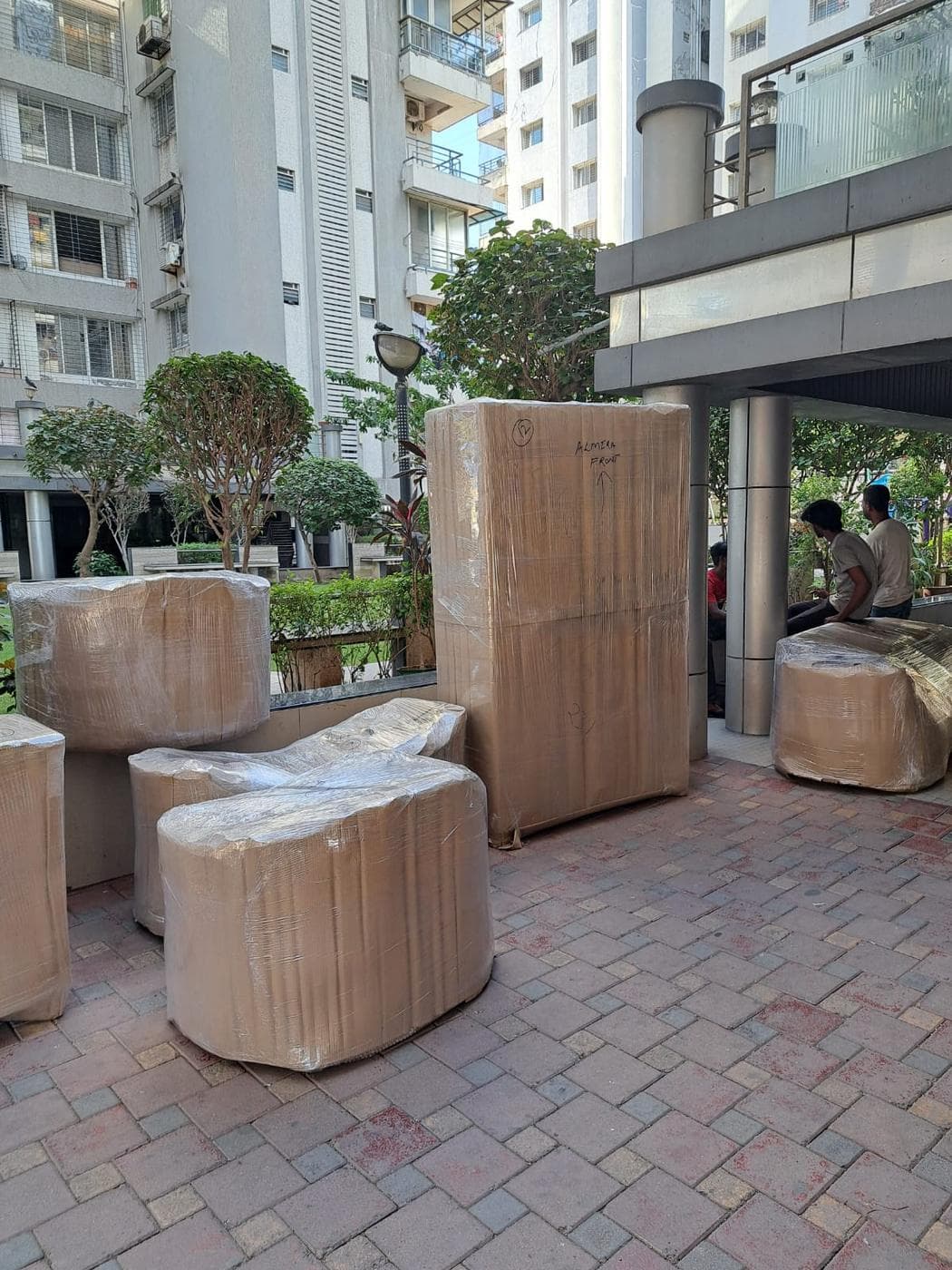
- 3.Freshly finished lobbies and lifts mean the team must lay floor protection. Confirm your partner carries it, or the society's damage deposit is at risk.
- 4.Access roads in developing belts are sometimes half-made. A partner who surveys the address first brings the right vehicle instead of a truck that cannot take the last turn.
Renting versus buying on a growth corridor
Renting first is a reasonable approach here too, the same advice that applies to Vadodara generally, but it carries an extra wrinkle on a growth corridor specifically: rental stock in a brand-new scheme can be limited in the first year or two after possession, since many early buyers move in themselves rather than renting out immediately. If renting is your plan, ask brokers about availability in slightly older phases of a multi-phase project, which often have more rental stock available than the newest-launched block. Buyers, meanwhile, get the advantage of choosing their exact floor and unit from a wider initial selection, which is less true once a scheme is fully sold out.
Common mistakes moving into a new-launch tower
- Booking movers off a generic address before the project has a stable postal identifier, then having the team struggle to locate the exact block on move day.
- Assuming the society office will handle lift booking and NOC paperwork, only to find the association hasn't formed yet in a first-possession batch.
- Skipping a pre-move survey because the flat is brand new and 'nothing can go wrong', then discovering the access road can't take a full-size truck.
- Not asking whether floor protection is included, and later facing a deduction from the interiors deposit for scuff marks in a freshly finished lobby.
- Scheduling a move during a scheme's peak possession weekend without booking well ahead, then losing the lift slot to another flat moving in the same block.
Choosing between an established area and a growth corridor
This isn't a question with one right answer, since it depends on what you're actually optimising for. If a short commute to a mature social infrastructure, established schools, walkable markets, matters more than getting the newest possible construction, Alkapuri, Akota or Gotri remain the safer bet. If getting more space and newer build quality for a comparable or lower budget matters more, and you're comfortable with infrastructure that's still catching up in places, Bhayli, Vasna-Bhayli Road or Waghodia Road are worth a serious look. Many families end up visiting both types of area at different times of day before deciding, since traffic patterns and noise on a growth corridor can look very different on a weekday morning versus a weekend evening.
What to check before finalising a purchase or rental
- 1.Confirm the project's RERA registration and possession status directly, not just what a broker states verbally.
- 2.Visit the specific block or tower, not just the sales office, and check the actual state of the approach road on the day.
- 3.Ask whether the residents' association has formed yet, and if not, who currently handles move-in coordination.
- 4.Check power backup and water supply reliability at the specific floor you're considering, since upper floors in a partly occupied building sometimes see weaker pressure or backup capacity early on.
- 5.For a growth-corridor address, ask specifically how far the nearest school, clinic and grocery option currently is, rather than assuming it matches the corridor's long-term plan.
What a shift costs in these corridors
Rates match the rest of the city. Indicative door-to-door ranges for a move within Vadodara, excluding 18% GST.
| Home size | Local shifting |
|---|---|
| 1 BHK | ₹2,168–₹3,500 |
| 2 BHK | ₹3,210–₹5,100 |
| 3 BHK | ₹4,210–₹6,700 |
Moving in from outside Vadodara? The Ahmedabad corridor (101 km) starts from ₹3,212 for a 1 BHK, and the Mumbai run (361 km) is well served by both dedicated trucks and cheaper part-load options. Route pages carry the full BHK-wise tables.
Weigh these belts against the established areas, Alkapuri, Akota, Gotri and more, in our full neighbourhood guide.
Read the neighbourhood guideBooking a mover for a new-tower shift? Our Vadodara hiring guide covers the checklist that keeps the bill honest.
Read the hiring guideGet matched with verified Vadodara movers and compare quotes for your move-in date.
Compare Vadodara quotesFrequently asked
Which areas of Vadodara are best for buying a new flat in 2026?
Vasna-Bhayli Road and Bhayli lead the western growth corridor with the most new RERA-registered projects, while Waghodia Road offers lower entry prices on the east side near the GIDC employment belt. Sama and New Sama are the established northern options.
What do new societies in Vadodara require before movers can start?
Most ask for move-in permission or an NOC from the builder or association, a booked service-lift slot, and floor protection in new lobbies. Some also hold a refundable deposit against damage during shifting. Arrange these before move day.
How much does it cost to shift into Bhayli or Vasna-Bhayli Road?
A move within Vadodara runs about ₹2,168–₹3,500 for a 1 BHK, ₹3,210–₹5,100 for a 2 BHK and ₹4,210–₹6,700 for a 3 BHK, excluding 18% GST. Access roads and lift availability decide where in the range your quote lands.
Is Waghodia Road well connected for daily commuting?
It sits close to the eastern GIDC belts and connects to the city centre via the ring road, though rush-hour traffic is a known pinch. Planned road and bridge work on the city's north and east sides is expected to improve it over the next few years.
Is Bhayli a good choice for a family moving from a central Vadodara neighbourhood?
For families wanting more space and newer construction at a comparable or lower budget, yes. The trade-off is a social infrastructure, schools, clinics, markets, that is still filling in compared with an established area like Alkapuri or Akota, so it's worth visiting the specific block before deciding.
How is Vasna-Bhayli Road different from Bhayli itself?
Vasna-Bhayli Road is the connecting corridor between the western suburbs and Gotri, lined with new apartment schemes, while Bhayli is the suburb at its far end. Infrastructure along the corridor tends to be more finished closer to Gotri and progressively newer further out.
What should I check before booking movers into a brand-new tower?
Confirm the exact block and a landmark since the address may not be fully standardised yet, check whether the residents' association has formed to handle lift bookings, and ask your partner to survey the access road, which can be incomplete in the first possession batches.
Are new-launch projects on these corridors RERA-registered?
Most current projects are, but confirm the specific registration for any project you're considering directly through the builder or RERA's records rather than taking a broker's word for it.
Will property prices in Bhayli or Waghodia Road keep rising?
It's reasonable to expect continued interest given the pace of new supply and improving infrastructure, but actual price movement depends on how quickly planned road and bridge work is completed and on broader market conditions. Treat it as a factor to weigh, not a guaranteed outcome.
Do these growth corridors have reliable water and power for new residents?
Generally yes, but a partly occupied large scheme can see tighter backup capacity or water pressure than it will once fully occupied, particularly on upper floors. Ask the builder's handover team directly about your specific floor before assuming it matches the marketing brochure.
Is it worth choosing a growth corridor over an established neighbourhood purely for a lower price?
Price alone isn't the full picture. Weigh it against your actual commute, how much you value mature social infrastructure being already in place, and how comfortable you are with a road network and amenities still catching up to the pace of new construction.
How far is Waghodia Road from the city centre?
It runs east from the city, connecting via the ring road, with the eastern GIDC belts closer than the central business districts. Commute time to the city centre depends heavily on rush-hour traffic on the ring road.
Is it easier to find a rental in a growth corridor or in an established Vadodara neighbourhood?
Established areas like Alkapuri, Akota and Fatehgunj generally have deeper rental stock, since a growth-corridor scheme's early units are often owner-occupied rather than rented out. If you need a rental soon, ask about slightly older phases of a multi-phase project on the corridor, which tend to have more availability.