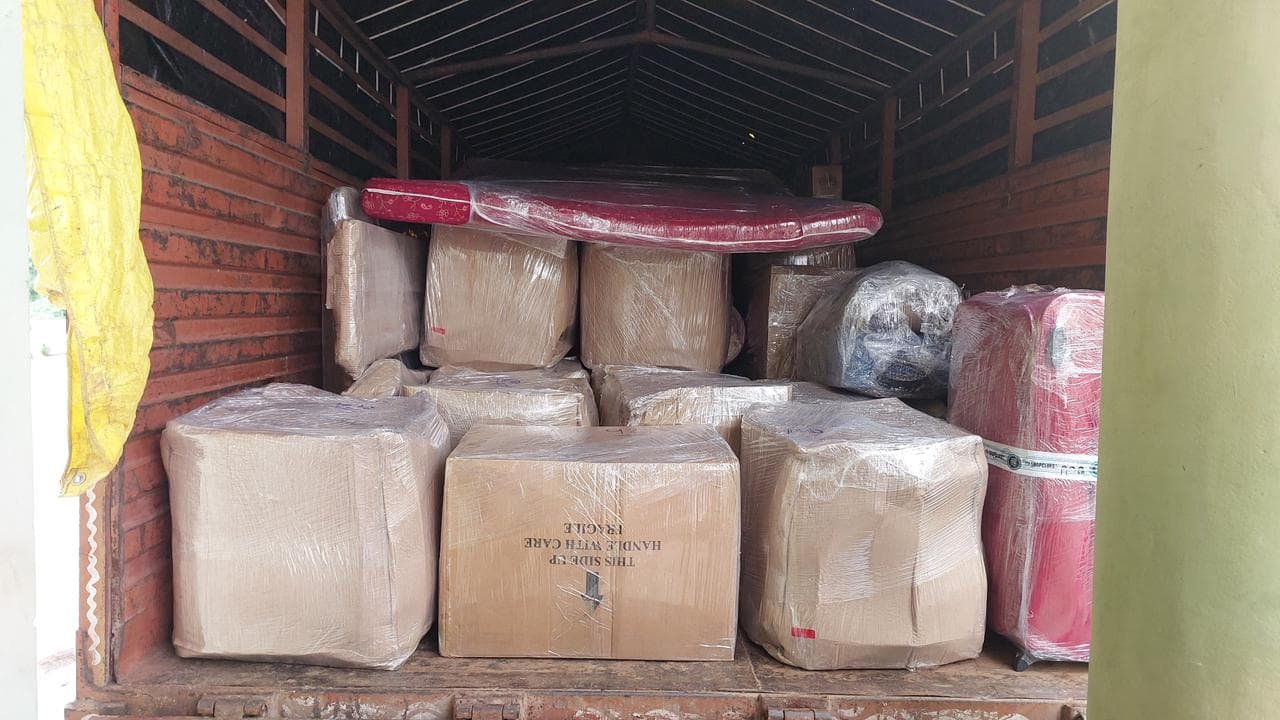
Real ways to cut your packers and movers bill in 2026, from decluttering to timing your move right, without cutting corners on safety.
Cutting your moving bill doesn't have to mean cutting corners. Most of the savings come from decisions made weeks before the truck shows up, not from haggling on moving day.
Where the savings actually come from
Not every tip moves the needle by the same amount. Here's a rough sense of which levers matter most, so you know where to spend your effort first.
| Lever | Typical impact |
|---|---|
| Decluttering before the survey | Directly lowers your volume tier, often the single biggest swing in the final number |
| Comparing quotes from multiple partners | The spread between the highest and lowest verified quote for the same job is frequently wide enough to matter |
| Booking off-peak (avoiding festival weeks and month-end) | Can avoid a 10 to 30% demand-driven markup that peak periods commonly carry |
| Part-pack instead of full-pack | Trims the packing-service line by handling low-risk items like clothes and books yourself |
| Part-load instead of a dedicated truck | Usually the biggest lever on intercity and interstate moves for a volume that doesn't fill a vehicle |
Stacking tips: what happens when you combine them
None of these tips work in isolation quite as well as they do together. Decluttering alone lowers your volume tier. Add a mid-month, off-peak date and you avoid a demand markup on top of that. Add a part-pack arrangement and you trim the packing line further still. None of these work against each other, they simply stack, which is why treating this as one combined checklist rather than picking a single trick usually produces the widest gap between the top and bottom of what a partner would otherwise quote you.
- Decluttering alone: lowers your volume tier, the single biggest lever on its own.
- Decluttering plus off-peak timing: a lower base with no demand markup added on top.
- Decluttering, off-peak timing and part-packing together: usually the widest gap you'll see between a careless quote and a carefully planned one.
- All of the above, plus comparing quotes from multiple verified partners: adds the chance of a genuinely better base price on top of every other saving.
Before you book
- 1.Declutter hard. Every item you don't move is volume, and volume is the biggest driver of price. Sell, donate or discard before the survey, not after.
- 2.Compare quotes from multiple verified partners rather than accepting the first number you get.
- 3.Book a pre-move survey instead of a phone estimate, it prevents both overpaying and being surprised by extra charges later.
- 4.Ask for an itemised quote so you can see exactly what's driving the total, and where you can trim.
A worked example: trimming a local 2 BHK move
Local 2 BHK moves in Gujarat's major cities typically range from around ₹3,180 to ₹5,200 before GST, depending on the city and access. A home carrying years of accumulated storage, old furniture and boxes nobody's opened in a while tends to land toward the top of that band. The same home, decluttered hard before the survey and moved on a mid-month weekday instead of a month-end weekend, often lands closer to the bottom of the same range, sometimes lower, simply because volume and demand are the two biggest inputs into the quote. None of that requires negotiating on price, it just changes what the surveyor is pricing.
Timing tricks
- Avoid festival weeks and month-end dates if your schedule allows it, since demand-driven pricing peaks there.
- Weekday moves are sometimes cheaper and easier to schedule than weekends.
- Book 2 to 3 weeks ahead where possible; last-minute bookings have less room to negotiate.
Self-drive rental vs hiring a full-service mover
For a very small move, some people consider renting a small truck and doing the whole thing themselves rather than hiring a mover at all. It can work for a studio or a very light 1 BHK with a friend or two to help, but the math isn't always as favourable as it first looks on paper.
| Self-drive rental | Full-service mover | |
|---|---|---|
| Vehicle cost | Daily rental plus fuel, paid regardless of how long loading takes | Included in the quoted price |
| Labour | You and anyone you can rope in do all the lifting | A trained team sized to your home |
| Packing material and technique | You source it and figure out the packing yourself | Included, handled by a team experienced with fragile and bulky items |
| Risk if something breaks | No insurance or accountability beyond your own care | Transit insurance available, and a partner accountable for the job |
| Best suited for | A very small, light load with willing helpers and a short distance | Anything beyond a studio, fragile items, or any real distance |
Selling or donating furniture: when it's worth it
Large furniture is one of the costliest things to ship purely by volume, and it's worth asking a simple question before you commit to moving a piece: would it cost more to ship this than to sell it here and buy something similar at the destination? For an old sofa, a bulky wardrobe or anything you're not especially attached to, the answer is often yes, particularly on an interstate move where volume and distance both add to the bill. For anything with real sentimental value or genuinely good build quality, it usually makes more sense to ship it regardless of the raw arithmetic.
Group and society-level savings
If more than one household in your building or society is moving around the same time, even to different destinations, it's worth asking whether a coordinated part-load booking makes sense, since a partner can sometimes plan more efficiently around multiple pickups on the same street or in the same complex. It's a less obvious lever than decluttering or timing, but in a large housing complex with high turnover, a quick check in the resident group before you book can occasionally turn up a coordinated saving nobody thought to ask about.
When it's not worth the extra effort
Not every saving is worth chasing. Spending a weekend hunting for marginally cheaper cardboard boxes rarely moves the needle compared with decluttering or timing your date well. Similarly, skipping insurance on a genuinely valuable item to save a small percentage of the total quote is a saving that can turn into a much larger loss if something goes wrong. Focus your effort on the handful of levers that actually shift the bill, and let the smaller stuff go.
Free ways to save vs ones with a tradeoff
Some savings cost you nothing but a bit of planning. Others trade a little convenience or risk for a lower number, and it's worth knowing which is which before you decide where to cut.
| Free (no tradeoff) | Requires a tradeoff |
|---|---|
| Comparing quotes from verified partners | Part-packing yourself, which takes your own time and some risk if done carelessly |
| Booking a mid-month, weekday date | Selling or donating furniture instead of moving it, which means replacing it later if you change your mind |
| Asking for an itemised, survey-based quote | Choosing a part-load truck, which can mean a wider delivery window |
| Requesting the GST-inclusive figure upfront so quotes compare fairly | Skipping insurance on genuinely low-value items only |
Packing choices that lower cost
- Part-pack instead of full-pack: box up clothing, books and non-fragile items yourself, and let the team handle only fragile or bulky goods.
- Reuse boxes for a local move rather than buying all-new material.
- Skip insurance on low-value items, but keep it for electronics and furniture that would actually hurt to replace.
Mistakes that quietly inflate your bill
- Accepting a phone estimate instead of a survey, since the gap between a rough guess and your actual volume almost always shows up as an add-on later, not a discount.
- Comparing an ex-GST quote from one partner against a GST-inclusive figure from another, and assuming the lower number is genuinely cheaper.
- Not asking about floor access, long-carry distance or lift availability upfront, all of which can add a charge that wasn't in the original number.
- Paying a large advance to 'lock in' a price without a written, itemised quote to hold the partner to.
- Booking during a genuine peak week when the schedule was actually flexible, and paying the demand premium unnecessarily.
- Waiting until the last few days to book, which removes most of your negotiating room since availability, not price, becomes the constraint.
For intercity and interstate moves
- Choose a part-load service if your volume doesn't fill a truck. It's usually cheaper than paying for a dedicated vehicle.
- Sell or donate large furniture that costs more to ship than to replace at the destination.
- Bundle vehicle transport with your household shipment on the same route instead of booking separately.
Negotiating without cutting corners
There's a real difference between asking a partner to compete on price and asking them to skip a step that protects your goods. It's reasonable to ask for a better rate on an off-peak date, request a bundled price for household goods plus a vehicle, or push for a part-load slot instead of a dedicated truck. It's a different matter entirely to hire the cheapest available operator without checking GST registration, skip insurance on genuinely valuable items to shave a small amount off the total, or accept a verbal price with nothing in writing. The first category is negotiating. The second is a saving that tends to cost more than it returns.
Cost-saving checklist by move type
| Move type | Top saving lever |
|---|---|
| Local, same city | Decluttering hard and comparing quotes from more than one verified partner |
| Intercity, within the state | Off-peak timing plus a part-load booking if your volume doesn't fill a truck |
| Interstate, long distance | Part-load where your volume allows it, bundling vehicle transport, and right-sizing insurance rather than skipping it |
Questions that reveal whether a quote is genuinely competitive
- Is this based on a survey or a phone estimate? A survey-based number is far more likely to hold, which matters more for your real cost than a low phone quote that grows later.
- Does this include GST? Comparing an ex-GST number against a tax-inclusive one makes a fair quote look worse than it is.
- What would make this price change on moving day? A partner who answers clearly is usually the one whose final bill matches the quote.
- Is a part-load option available for my volume? It's easy to forget to ask, and it's often the single biggest saving on an intercity or interstate move.
What not to cut
Don't skip GST-verification or background checks on your mover to save a small percentage. The cheapest quote from an unverified operator is the one most likely to cost you in damage, delays or a mid-move price hike. Comparing quotes from verified partners protects the saving you're trying to make.
Adjust the sliders and see exactly what each choice does to your total.
Try the cost calculatorSee our transparent rate card, no hidden line items.
View pricingCompare quotes from verified partners before you book.
Browse verified partnersFrequently asked
What's the single biggest way to reduce moving costs?
Decluttering before your pre-move survey. Volume is the primary driver of price on almost every quote, so fewer items directly means a lower bill.
Does part-packing actually save money?
Yes. Handling your own non-fragile items, like clothes and books, while leaving fragile or bulky goods to the professionals, typically costs less than full-service packing without adding meaningful risk.
Is it worth comparing multiple quotes for a small local move?
Yes, even local moves can vary meaningfully in price between operators. Comparing a few verified quotes is instant and can save a noticeable percentage.
Should I skip insurance to save money?
It depends on what you're moving. Skipping insurance on low-value, easily replaceable items is reasonable, but electronics and furniture you'd genuinely miss are usually worth the small added cost.
Can moving on a weekday really save money?
In many markets, yes. Weekend and month-end dates see the highest demand, and some partners price weekday slots more competitively as a result.
How much can decluttering realistically reduce my bill?
It varies by home, but volume is typically the largest single input into a quote, so cutting even a room's worth of unused storage before the survey often moves you into a noticeably lower pricing tier.
Is it worth negotiating directly with a moving partner?
It's reasonable to ask about off-peak rates, bundled pricing for a vehicle plus household goods, or a part-load slot. It's not worth pushing a partner to skip GST verification or insurance just to shave the total further.
Should I pay the full amount upfront to try and get a discount?
Be cautious with this. A large advance without a written, itemised quote reduces your leverage if something in the final bill doesn't match what was promised. Most legitimate partners work with a standard partial advance.
What's the difference between a genuine saving and a risky shortcut?
A genuine saving, like decluttering or comparing quotes, costs you nothing but time. A risky shortcut, like hiring an unverified operator purely because they quoted lowest, usually shows up later as damage, delay or an unexpected charge.
Does bundling vehicle transport with a household move actually save money?
Often, yes. Shipping a car or bike alongside your household goods on the same route is typically more efficient for the partner than two separate bookings, and that efficiency is frequently reflected in the price.
Is short-term storage a cost-saving option or an added expense?
It's an added line item, but it can prevent a bigger cost, like a rushed second move or a gap in accommodation, if your move-out and move-in dates don't align. Weigh it against what the alternative would actually cost you.
Do smaller moving companies always cost less than larger ones?
Not necessarily. Price depends more on your volume, the route and the season than on the size of the company. Comparing itemised quotes from a few verified partners is a more reliable way to find the best price than assuming smaller means cheaper.
Is renting a truck and moving myself actually cheaper than hiring a mover?
Only in narrow cases, like a very small, light load over a short distance with willing helpers. Once you account for fuel, your own time, no insurance and the real risk of damage without trained handling, a full-service mover is often better value than it first appears.
Should I ship large furniture or replace it at the destination?
Weigh the shipping cost against the item's value to you. Bulky, low-attachment pieces like an old sofa often cost more to move than to replace, while anything with real sentimental or build-quality value is usually worth shipping regardless.
Can moving at the same time as a neighbour actually save money?
It can, if your partner is able to plan a coordinated part-load pickup across nearby addresses. It's not guaranteed, but it costs nothing to ask when more than one household in the same building is moving around the same time.
What single question tells me the most about whether a quote is fair?
Ask what could make the price change on moving day. A transparent partner answers clearly and specifically, and that clarity is a strong sign the survey-based number you were given will actually hold.
Should I ask about part-load pricing even if I haven't thought about it?
Yes, always ask, especially for an intercity or interstate move. It's frequently the single biggest lever on those routes, and it's easy for it to go unmentioned unless you bring it up yourself.