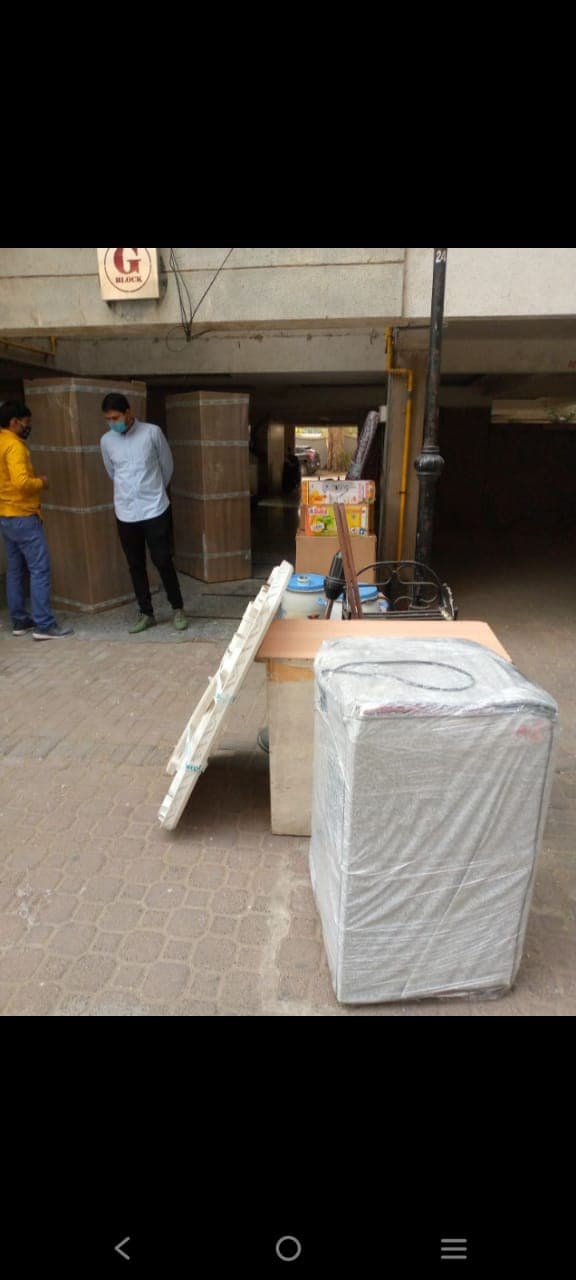
A complete household shifting checklist for 2026, from 6 weeks out to moving day, so nothing gets forgotten in the packing rush.
Most moving stress comes from things remembered too late: a forgotten broadband cancellation, a document left in a packed box, a society NOC nobody applied for. A checklist fixes that. Here's a stage-by-stage plan for a household shift.
6 weeks before
- Declutter room by room. Anything unused in a year is a candidate to sell, donate or discard before the survey.
- Request quotes from verified partners and book a pre-move survey so pricing is accurate, not guessed over the phone.
- Start a folder for essential documents: property papers, ID proof, school records, medical files.
Decluttering: a practical checklist
- Sell: furniture in good condition, working appliances you're replacing, and anything with resale value that's simply outgrown its use.
- Donate: clothing, books and household items in usable condition that aren't worth the effort of selling.
- Discard: broken appliances, expired medicines and pantry items, and anything genuinely unusable rather than moving it and dealing with it later.
- Digitise: old paper bills, warranty cards and documents you don't need in physical form, freeing up a surprising amount of folder space.
Doing this before the survey rather than after matters, since a lighter load is the single biggest lever you have on the final quote.
Documents to gather early
- Property papers or the signed rental agreement for the new address.
- Government ID proof for every adult in the household, plus Aadhaar and PAN copies.
- School records and transfer certificates if children are changing schools.
- Medical records and current prescriptions, especially for anyone on regular medication.
- A recent utility bill from the old address, often useful as supporting proof when setting up new connections.
What a household move typically costs
Knowing a rough number before you request quotes helps you tell a fair price from an inflated one. These are indicative 2026 ranges for a local, within-city move, excluding 18% GST.
| Home size | Local shifting | Notes |
|---|---|---|
| 1 RK / 1 BHK | ₹2,100–₹3,500 | Basic packing, single trip |
| 2 BHK | ₹3,200–₹5,200 | Standard packing, small team |
| 3 BHK | ₹4,200–₹6,800 | Full packing recommended |
| 4 BHK / Villa | ₹6,500–₹11,000 | Multiple trips or larger vehicle |
What to expect during the pre-move survey
A pre-move survey, in person or over video call, is what turns a rough phone estimate into an accurate quote, and it's worth prepping for rather than treating as a formality.
- 1.The surveyor walks through each room, noting major furniture, appliances and roughly how many cartons the rest of your belongings will need.
- 2.Flag bulky or unusual items by name, a piano, an aquarium, a heavy safe, since these carry their own line item and are easy to miss in a quick walkthrough.
- 3.Mention floor access and lift availability at both addresses, since this changes labour needs and pricing.
- 4.Ask for the estimate itemised: packing, labour, transport and GST listed separately, not bundled into one number.
3 weeks before
- Apply for society NOC and lift booking at both the old and new address if you live in a gated complex.
- Begin packing items you won't need in the next month: off-season clothes, books, decor.
- Order enough packing material if you're doing any self-packing, or confirm the mover is supplying it.
Room-by-room checklist before the team arrives
Beyond packing, a handful of room-specific tasks need doing before anyone starts loading, and they're easy to miss in the rush of the final week.
| Room | Check before the team arrives |
|---|---|
| Kitchen | Defrost and empty the fridge at least a day ahead, use up or discard perishables, disconnect and drain the water purifier |
| Bedroom | Take down curtains and rods, clear and check under-bed storage, strip bedding last |
| Bathroom | Empty and dry any water-storage containers, pack toiletries last in a bag you'll carry yourself |
| Living room / balcony | Remove wall-mounted TV brackets and photo frames, check balcony storage and planters, coil and label appliance cords |
| Loft / storage areas | Check deliberately rather than assuming it's empty; this is where forgotten items hide most often |
1 week before
- Schedule utility transfers or disconnections: electricity, gas, broadband, DTH.
- Update your address for bank accounts, Aadhaar, vehicle registration and important subscriptions.
- Pack a first-night bag with essentials so you're not digging through boxes on arrival.
- Confirm move-day timing, vehicle size and team count with your partner.
Renters vs homeowners: what changes
| Renters | Homeowners | |
|---|---|---|
| Deposit / handover | Schedule an exit inspection with the landlord and confirm the deposit refund timeline | Confirm the property is handed over cleanly if you're renting or selling it out |
| Society / RWA | Return access cards and parking stickers issued in your name | Update ownership or occupancy records and transfer maintenance billing |
| Utilities | Confirm the connection is in your name before transferring or closing it | Same, plus update property tax records with the new address if required |
| Address proof at the new home | The new rental agreement usually serves as local address proof | The registered sale deed serves as address proof |
Moving day
- 1.Do a final walkthrough of every room, including cupboards, balconies and the loft, before the truck leaves.
- 2.Keep valuables, cash, jewellery and documents with you, never in the shipment.
- 3.Take photos of high-value or fragile items before they're packed, for your own record.
- 4.Check the inventory list against what's loaded before the vehicle departs.
Who to notify about your address change
- Banks and credit card issuers, so statements and cards aren't mailed to the old address.
- Aadhaar, PAN and voter ID records, updated through the respective portals.
- Vehicle registration (RC) and driving licence, if you're changing state or a long-term local address.
- Insurance providers: health, life and vehicle policies all carry an address on file.
- Your employer's HR records, since payslips and tax documents sometimes rely on it.
- E-commerce accounts, food delivery apps and any recurring subscriptions with saved addresses.
The first 48 hours in your new home
- 1.Unpack the first-night bag and set up one working bathroom and one bed before anything else.
- 2.Confirm electricity, water and gas connections are working, and flag any issue immediately rather than waiting.
- 3.Match delivered goods against your inventory list, and note any damage in writing within the claim window your partner specified.
- 4.Locate the fuse box, main water valve and nearest emergency exit if you're in an apartment complex.
- 5.Locate the nearest pharmacy, clinic and grocery store, information worth having before you actually need it in a hurry.
Full packing vs self-packing: which fits your checklist
This decision affects your checklist more than almost anything else, since it changes how many of the tasks above land on you versus the team.
| Self-packing | Full packing | |
|---|---|---|
| Your checklist workload | Heavier: sourcing material, packing every room yourself | Lighter: mainly decluttering and documents |
| Best suited to | Clothes, books, non-fragile everyday items | Crockery, electronics, artwork, a full household in one go |
| Timing | Spread packing across several evenings before moving day | Team packs everything on moving day itself |
Most households land in between: self-packing the low-risk items on their own timeline, and letting the team handle anything fragile on moving day itself.
Should you add transit insurance to your checklist
For a small local move with low-value goods, it's often skippable. For a move carrying electronics, appliances or furniture you'd genuinely miss, transit insurance is usually a small percentage of the total cost and worth requesting explicitly, since it's rarely added by default. Add "confirm insurance and declared value" to your 3-weeks-before list if your move falls into that second category.
Common household-shifting mistakes
- Accepting a phone-only estimate instead of a proper survey, which is the single biggest reason a final bill grows on moving day.
- Leaving document sorting for the last week, when it competes for time with packing and utility transfers.
- Not confirming lift booking or a parking slot for the truck at the new address in advance, which can delay unloading by hours.
- Packing valuables into a numbered box instead of carrying them personally, making them harder to track and easier to misplace.
- Skipping the final walkthrough because everyone's tired and ready to leave, then discovering something left behind days later.
Packing material checklist
- Small, medium and large corrugated boxes, sized for books and heavy items through to linens and light bulky items.
- Bubble wrap and packing paper for crockery, glassware and electronics.
- Stretch film to bundle drawers shut and protect upholstered furniture corners.
- Coloured tape or labels for tagging boxes by room, which speeds up unloading considerably.
A 2 BHK typically needs 25 to 35 boxes across all sizes; a full material and technique breakdown is worth reading separately if you're self-packing any part of the move.
How long a household move takes, start to finish
A local, within-city move usually wraps up in a single day: packing, loading, transport and unloading, especially for a 1 or 2 BHK. A 3 or 4 BHK with full packing can run a full day for packing and loading alone, with delivery the same evening if the destination is nearby. Once the move crosses city or state lines, the timeline shifts from a single day to the transit window itself, which can run anywhere from a few hours to a couple of days depending on distance.
Setting a budget beyond the mover's quote
- A security deposit or advance rent at the new address, which often needs to be paid before moving day, not after.
- Short-term storage if your move-out and move-in dates don't line up exactly.
- A parking or access permit if the new building has a narrow approach road that needs prior clearance for a large truck.
- A basic cleaning service at the old address before handover, and at the new one before you unpack.
- Small cash for last-minute needs on moving day, even if the main payment to your partner is digital.
Interstate household moves: what's different on the checklist
Everything in this checklist still applies, but an interstate move adds a couple of extra items: confirm transit insurance given the longer time your goods spend on the road, pack a few days of clothing rather than just a first-night bag since delivery can take a day or two on longer routes, and check whether your partner offers part-load pricing if your volume doesn't fill a truck on its own.
Special situations: what to add to the checklist
- Moving with pets: keep them in a quiet, closed room away from the open front door on moving day, and update microchip or vet records with the new address.
- Moving with elderly family members: plan for a slower pace on moving day, and keep essential medicines and mobility aids within easy reach rather than packed away in a box.
- Moving with a home office: back up work files separately from the household documents folder, and confirm the broadband installation date at the new address before disconnecting the old one.
- Moving with young children: pack a familiar toy or comfort item in the first-night bag, and consider arranging a sitter or an outing for very young kids during the loudest part of the day.
Not sure what your move will cost yet? Get an instant range based on your home size and route.
Try the cost calculatorSee a fixed rate card for home relocation by BHK size.
View pricingCompare quotes from verified partners before you lock in a moving date.
Browse verified partnersFrequently asked
How many weeks in advance should I start planning a house move?
6 weeks gives comfortable lead time for decluttering, comparing quotes and sorting paperwork. For a smaller local shift, 2 to 3 weeks is workable if your schedule is tight.
What should I pack myself versus leave to the movers?
Documents, valuables, medicines and anything irreplaceable should travel with you personally. Everything else, furniture, kitchenware, clothing, is typically handled by the team, especially if you've opted for full packing.
Do I need a society NOC to move out?
Many gated societies require a no-objection certificate and a booked lift slot before movers can bring a truck in. Check your society's rules at least 2 to 3 weeks ahead.
What's the most commonly forgotten item on moving day?
Items in the loft, balcony storage and behind large furniture are the most frequently missed. A final room-by-room walkthrough before the truck leaves catches almost all of them.
Should I update my address before or after the move?
Start updating banks, Aadhaar and subscriptions a week before the move where possible, and finish the rest within your first week at the new address to avoid delivery and verification issues.
What documents should I keep aside before the movers start packing?
Property papers or the rental agreement, ID proof for every adult, Aadhaar and PAN copies, children's school records and any current medical prescriptions. Keep them in one folder you carry yourself, not in a box on the truck.
How is the checklist different for renters compared to homeowners?
Renters need to schedule an exit inspection and confirm their deposit refund timeline with the landlord, while homeowners focus more on updating ownership records with the society and transferring property tax details to the new address.
What should I check in the first 48 hours after moving in?
Confirm electricity, water and gas connections are working, match delivered goods against your inventory list, and note the location of the fuse box and main water valve. It's also worth locating a nearby pharmacy and grocery store early.
Do I need to inform my bank before or after moving?
As soon as your new address is confirmed, ideally in the final week before the move, so cards, cheque books and statements don't get mailed to the old address after you've left.
How do I handle moving with a pet on moving day?
Keep pets in a quiet, closed room away from the open front door while the team is loading, and update their microchip or vet records with the new address once you've settled in.
What's often missed when elderly family members are part of the move?
Essential medicines and mobility aids getting packed away in a general box rather than kept accessible is the most common oversight. Plan for a slower pace on moving day itself, rather than rushing everyone through it.
Should I keep a separate checklist for each room?
It helps for larger homes. A short per-room list, defrosting the fridge, taking down curtains, checking under-bed storage, catches tasks a single household-wide checklist can easily miss.
How many boxes should I budget for in a 2 BHK move?
Roughly 25 to 35 boxes across small, medium and large sizes, though a pre-move survey gives a more accurate count based on exactly what you own.
Should transit insurance be on my moving checklist?
Add it if you're carrying electronics, appliances or furniture you'd genuinely miss. It's usually a small percentage of the total move cost and needs to be requested explicitly, since most quotes don't include it by default.
What's the biggest budget item people forget to plan for beyond the mover's quote?
A security deposit or advance rent due at the new address before moving day, and short-term storage if move-out and move-in dates don't align. Both are easy to overlook until they're suddenly due.