What does it cost to ship a two-wheeler across India in 2026? Pricing by distance, carrier type, and how bike transport charges compare to a full household move.
Riding your bike across three states isn't practical, and putting it on a train comes with its own paperwork and waiting lists. Bike transport through a packers and movers partner is usually faster and safer for the vehicle. Here's what it costs in 2026 and what changes the price.
Bike transport cost by distance
Charges are driven mainly by distance and whether you choose an open or enclosed carrier. These are indicative 2026 ranges for a standard commuter or mid-size bike, excluding GST.
| Route length | Open carrier | Enclosed carrier |
|---|---|---|
| Under 300 km | ₹1,800–₹3,200 | ₹2,800–₹4,500 |
| 300–700 km | ₹2,800–₹4,800 | ₹4,000–₹6,500 |
| 700–1,200 km | ₹4,000–₹6,500 | ₹5,500–₹9,000 |
| Over 1,200 km | ₹6,000–₹10,000+ | ₹8,000–₹14,000+ |
Pricing by bike segment
Knowing where your bike sits on this scale helps you sanity-check a quote before you commit, rather than being surprised by a higher number for a heavier machine.
The table above assumes a standard commuter or mid-size bike. Heavier bikes cost more to load and secure, and the increase scales with weight and size rather than a flat add-on.
| Segment | Typical adjustment |
|---|---|
| Scooter / commuter up to 150cc | Baseline rate |
| Mid-size 150 to 350cc | 10 to 20% above baseline |
| Cruiser or tourer 350 to 650cc | 30 to 50% above baseline |
| Superbike over 650cc | Priced individually, often with mandatory crating |
Documents you'll need
- A copy of the bike's registration certificate (RC), matched against the chassis and engine number at pickup.
- A copy of valid insurance, since most carriers won't transport an uninsured vehicle.
- Government ID matching the RC owner, or an authorisation letter if someone else is booking on the owner's behalf.
- A spare key handed to the carrier for loading and unloading, separate from the one you keep.
- A signed condition report noting existing scratches or dents, so there's a clear before record.
How a bike actually gets loaded and secured
This part of the process is where most of the risk in bike transport actually sits, more than the highway miles in between, which is why it's worth understanding before you hand your keys over.
- 1.Pre-loading inspection: the carrier photographs the bike from multiple angles and notes any existing damage on a condition report.
- 2.Fuel check: the tank is drained to near-empty, both for loading safety and because a full tank adds unnecessary weight.
- 3.Battery and mirrors: the battery terminal is sometimes disconnected for long hauls, and mirrors are folded or removed to save space.
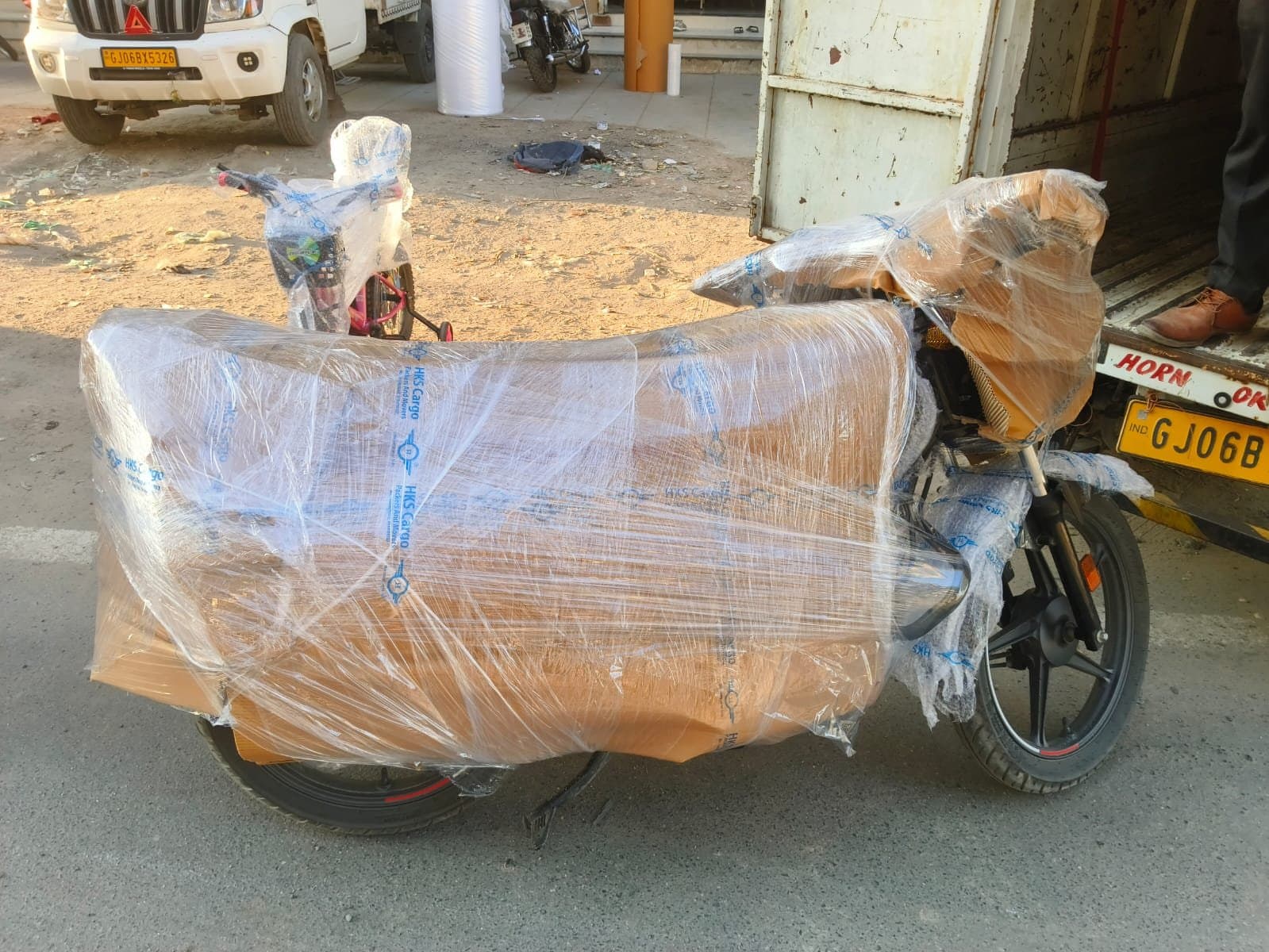
- 4.Securing: the bike is strapped upright to the carrier bed or crate using wheel chocks and tie-downs at multiple points, not just the handlebars.
- 5.Enclosed or crated bikes get an additional layer of protective wrapping around the tank and panels before the container is sealed.
- 6.At delivery, the same condition report is checked against the bike's actual state before you sign off.
Train parcel, self-ride or a carrier: how they compare
| Indian Railways parcel | Self-ride | Carrier transport | |
|---|---|---|---|
| Cost | Often cheapest on paper | Fuel and toll only, but adds wear | Mid to higher, door to door |
| Convenience | Station drop-off and pickup required | You do all the driving yourself | Door-to-door, minimal effort |
| Time | Can involve waiting lists | Fastest if you ride nonstop | Depends on route and load sharing |
| Wear on the bike | Minimal, bike is stationary | Significant over long distances | Minimal, professionally secured |
| Best for | Budget movers near a station | Short distances, adventure riders | Most intercity relocations |
Typical transit time by distance
| Distance | Typical transit |
|---|---|
| Under 300 km | Up to 6 hours |
| 300–700 km | 5–14 hours |
| 700–1,200 km | 12–24 hours |
| Over 1,200 km | 1–2 days |
Common mistakes when shipping a bike
- Not draining the fuel tank fully, which can delay loading or breach the carrier's safety terms.
- Skipping the condition report, then having no reference point if a new scratch shows up at delivery.
- Assuming insurance is automatic. Most policies are optional add-ons that need to be requested and confirmed before pickup.
- Booking the cheapest quote without checking whether it's open or enclosed, then being surprised by dust or weather exposure on a premium bike.
- Leaving personal items in the saddlebags or under the seat, which most carriers exclude from coverage entirely.
Insurance and claims for bike transport
Transit insurance for a bike typically covers damage during loading, transport and unloading, along with total loss in the rare event of a serious accident involving the carrier vehicle. It's usually priced as a small percentage of the bike's declared value, so confirm that value upfront rather than leaving it vague. If something does happen, photograph the damage immediately against your original condition report, and report it in writing within the claim window stated in your policy, often a day or two after delivery.
Open vs enclosed carriers
- Open carrier: bikes are strapped onto a flatbed truck, exposed to weather and dust. It's the cheaper, more common option for standard commuter bikes.
- Enclosed carrier: bikes travel inside a covered container, protected from rain, dust and road grit. Worth the extra cost for premium or high-value motorcycles.
- Crating: some movers offer wooden crating for extra protection on long-haul or interstate routes, usually as an add-on.
What affects the final price
- Engine capacity. Larger bikes and heavier cruisers cost more to load and secure than a standard 100-150cc commuter.
- Fuel level. Most carriers require the tank to be nearly empty before loading, for safety reasons.
- Insurance. Transit insurance is optional but recommended for higher-value bikes; it adds a small percentage to the base fare.
- Pickup and drop location. Door-to-door service costs more than dropping the bike at a hub or terminal yourself.
Electric scooters and e-bikes
Electric two-wheelers travel on the same carriers as petrol bikes, but the battery changes a couple of things. Carriers generally ask for the battery to be at a partial, not full, charge before pickup, and removable batteries are sometimes carried separately from the vehicle for safety. If your e-scooter has a fixed, non-removable battery, mention this clearly when you book, since it affects how the carrier plans loading and storage for that leg of the route.
What's usually excluded from a standard quote
- Loose accessories not bolted to the bike, like helmets, riding gear or saddlebags packed with belongings.
- Repairs for pre-existing mechanical issues discovered during the pre-loading inspection.
- Storage beyond a short grace window if you can't receive the bike on the scheduled delivery date.
- Insurance, unless you've specifically requested and confirmed it as part of the booking.
A bike transport quote that looks unusually cheap is worth a second look. The gap is almost always insurance, condition documentation, or the difference between open and enclosed transport.
Preparing your bike before pickup
- Wash the bike beforehand so the pre-loading inspection photos show accurate, visible condition rather than dust hiding a scratch.
- Remove aftermarket accessories that aren't securely bolted on, like phone mounts or loose saddlebags, and carry them separately.
- Note the odometer reading alongside the condition report, useful if a self-ride option was ever on the table for comparison.
- Keep the spare key, RC copy and insurance copy together in one place so handover at pickup is quick.
Interstate vs intrastate bike transport
Moving a bike within the same state is generally simpler on paperwork, since it avoids the permit and border considerations that come with crossing into another state. Interstate transport still doesn't usually require anything extra from you personally, since the carrier handles route permits for the vehicle itself, but it does mean a longer transit window and a stronger case for transit insurance, given the extra day or two your bike spends on the road.
Seasonal timing for bike transport
Monsoon season adds handling time for open carriers, since tarpaulin covers need checking and re-securing if a route runs through heavy rain. Festival weeks and the March financial year-end also see a bump in demand, as more people relocate for work around these periods, which can extend booking lead times. If your dates are flexible, booking outside these windows generally means faster scheduling and more carrier options to choose from.
Choosing between multiple bike transport quotes
- 1.Confirm whether each quote is for open or enclosed transport, since comparing the two directly isn't a fair comparison.
- 2.Ask about the condition report process specifically, since a carrier without one is harder to hold accountable for new damage.
- 3.Check whether insurance is included or an add-on, and get the declared value process explained before booking.
- 4.Ask for an estimated transit window, not just a delivery date, since carriers consolidating multiple bikes on one route can add a day or two.
- 5.If you're also relocating your household on the same route, ask whether bundling the bike into that job brings the price down.
Sharing a carrier with other bikes
Most bike transport runs as a consolidated load, several bikes from different customers sharing the same open or enclosed carrier on a common route, rather than a dedicated vehicle for a single bike. This is exactly why bike transport costs less than shipping a car, and also why delivery windows are usually given as a range rather than a fixed hour, since the carrier may make more than one stop to drop off different customers along the way. If you need a fixed delivery time, ask specifically whether a dedicated single-bike vehicle is available on your route and what it costs over the shared option.
What happens if delivery is delayed
Reputable carriers share an estimated delivery window upfront and update you if weather, route conditions or consolidation with other shipments pushes it out. Ask about tracking and communication before you book, especially for longer routes where the bike may share space with other vehicles and the exact delivery hour is harder to pin down in advance.
Bike transport with a house move
If you're relocating your whole household on the same route, bundling bike transport with the move is usually cheaper than booking it separately, since the vehicle can share the same run. Mention it when you request your quote so the partner can price it as one job.
Why verification matters for vehicle transport too
Bike transport carries the same verification questions as a full household move, condition reports, insurance terms and a written quote, just for a smaller shipment. A verified partner with GST registration and clear insurance terms is worth the same scrutiny as you'd apply to a house move, since the cost of a poorly handled bike transfer, a scratched tank, a dropped handlebar, can outweigh whatever you saved on the cheapest quote.
Get a live estimate for your bike's route, distance and carrier type.
Estimate your transport costSee fixed rate tiers for vehicle transport alongside our other services.
View the rate cardCompare quotes from verified partners who handle vehicle transport alongside household moves.
Browse verified partnersFrequently asked
How much does it cost to transport a bike from one city to another in India?
For a standard commuter bike, expect roughly ₹1,800–₹3,200 under 300 km on an open carrier, rising to ₹6,000–₹10,000 or more on routes over 1,200 km. Enclosed carriers and premium bikes cost more.
Is bike transport cheaper by train or by a moving partner?
Indian Railways' parcel service can be cheaper on paper, but it comes with station drop-off and pickup, packing requirements and longer transit windows. Door-to-door transport through a verified partner usually costs more but saves time and hassle.
Do I need to drain the fuel tank before transport?
Most carriers require the tank to be nearly empty, both for safety during loading and because full tanks add weight. Your partner will confirm exact requirements when you book.
Can I transport a bike without moving my whole house?
Yes. Bike transport is available as a standalone service on most intercity routes, separate from a full household move.
Is bike transport insured?
Transit insurance is available as an add-on with most verified partners and is worth considering for higher-value or newer bikes. Confirm the declared value and claim process before you book.
How much extra does a cruiser or superbike cost to transport?
A cruiser or tourer in the 350 to 650cc range typically runs 30 to 50% above the standard commuter rate, while superbikes over 650cc are usually priced individually and often need crating rather than standard strapping.
What documents do I need to hand over for bike transport?
A copy of the registration certificate, valid insurance, government ID matching the RC owner, and a spare key for the carrier. A signed condition report at pickup is also standard practice with verified partners.
Is it better to ship a bike enclosed or ride it myself?
Riding yourself avoids transport cost but adds real wear over a long distance and takes days off your schedule. An enclosed carrier costs more than open transport but keeps mileage and weather exposure to a minimum, which matters most for premium or newer bikes.
Do I need any special permits for interstate bike transport?
Not personally. Your carrier handles route permits for the transport vehicle itself. What changes for you is mainly the longer transit window and a stronger case for adding transit insurance.
What if my bike arrives with new damage?
Check it immediately against the condition report taken at pickup, photograph any new damage, and report it in writing within your policy's claim window, which is often a day or two after delivery.
Can I remove the battery before transport?
Some carriers disconnect or request removal of the battery terminal for long hauls as a precaution. Ask your specific partner's process during booking rather than assuming it's handled automatically.
Does monsoon season affect bike transport timing?
It can. Open carriers need extra handling time to check and re-secure tarpaulin covers on rain-affected routes, and this can add slightly to transit windows during heavy weather.
Can I transport an electric scooter the same way as a petrol bike?
Yes, on the same carriers, though the battery needs attention. Most partners ask for a partial rather than full charge before pickup, and a removable battery is sometimes carried separately for safety.
What's excluded from a standard bike transport quote?
Loose accessories like helmets or riding gear, repairs for pre-existing mechanical issues, extended storage beyond a short grace window, and insurance unless specifically requested. Confirm what's included before comparing two quotes.
Should I verify a bike transport partner the same way as a house-moving company?
Yes. Check GST registration, ask for a written quote and confirm the condition report and insurance process before booking, the same scrutiny that protects a full household move applies to a smaller vehicle shipment too.
Why is my delivery window a range instead of a fixed time?
Most bike transport runs as a shared load with other customers' bikes on the same carrier, so the vehicle may make more than one stop along the route. A dedicated single-bike vehicle is usually available at a higher cost if you need a fixed delivery time.