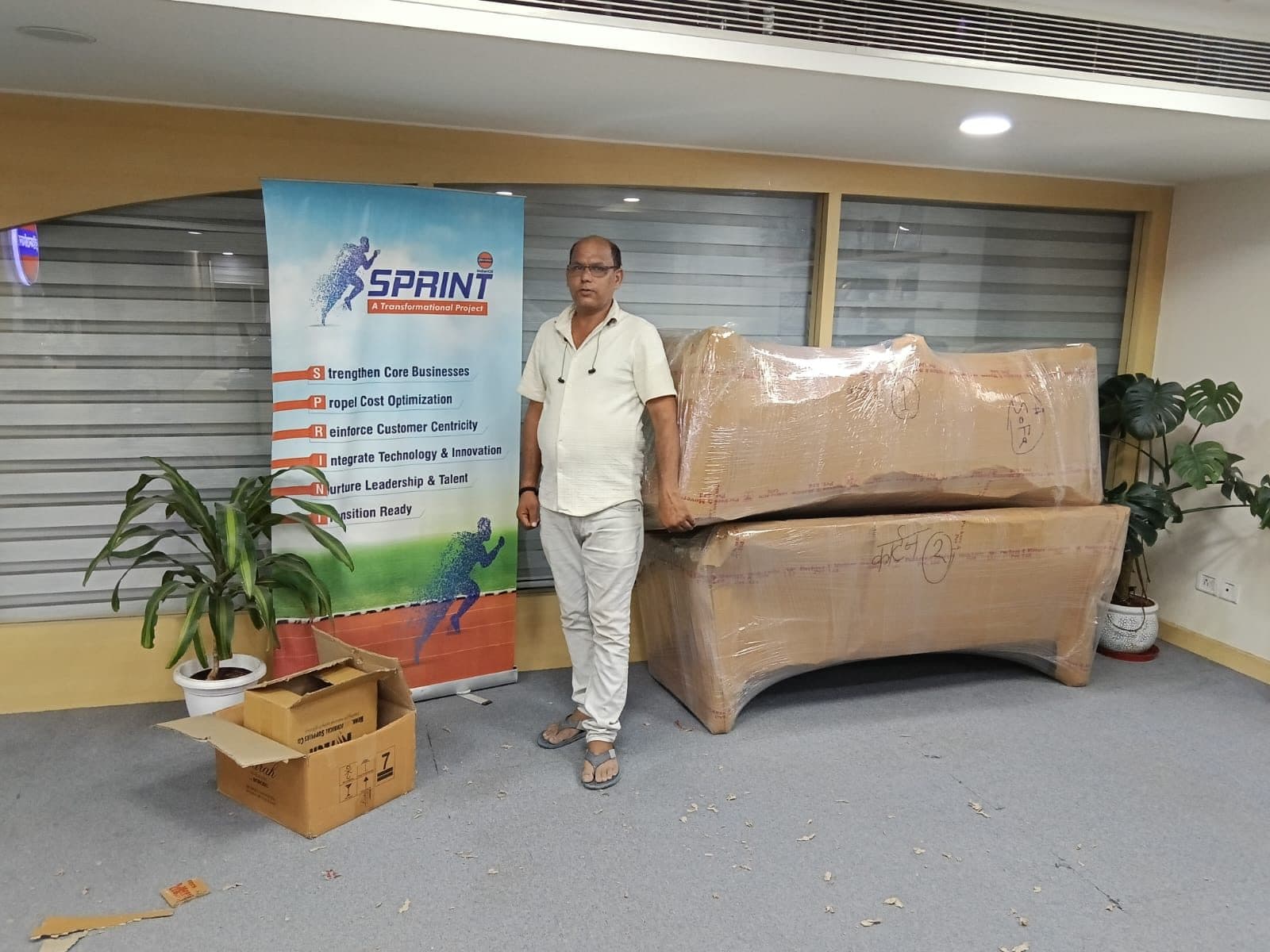
Appliance moving done right: defrosting a fridge, transit bolts for washing machines, AC uninstallation, and what professional teams do differently with big appliances.
Large appliances are where moves quietly go wrong. A fridge laid flat, a washing machine with a loose drum, an AC yanked off the wall by an untrained hand: each one is an expensive repair that a few minutes of correct prep would have prevented. Here is how to move the big four safely.
Refrigerator
- Empty it and defrost at least 24 hours before the move, with the door open and a towel under the freezer to catch meltwater.
- Dry the interior fully and tape shelves or remove them. Loose glass shelves crack easily in transit.
- Transport upright. Tilting a fridge on its side can send compressor oil into the cooling lines.
- At the new home, let it stand upright for a few hours before switching it on, so the oil settles back.
Double-door and side-by-side fridges
Larger fridges add a second door, sometimes a water line, and enough extra weight that a two-person carry is no longer optional. The doors should be taped shut and, if the manual allows it, unhinged and carried separately to cut both weight and width through corridors and stairwells. If your fridge has a plumbed water or ice dispenser, the line needs shutting off and draining before pickup, the same way you would treat a washing machine's inlet hose, or you risk a slow leak inside the truck.
Washing machine
- Run a final empty cycle a day ahead, then drain the inlet and outlet hoses completely.
- Fit the transit bolts that came with the machine if you still have them. They lock the drum, which is the part most often damaged in a move.
- No transit bolts? Ask the team to pad the drum area generously and keep the machine upright.
- Tape the door shut and pack hoses and the power cord in a labelled bag taped to the machine.
Front-load vs top-load: what changes
Front-load machines carry the drum on springs and shock absorbers, exactly the assembly transit bolts exist to lock down, so treat the bolts as close to mandatory rather than optional. A front-loader moved without them can arrive with a drum that bangs against the housing on every wash cycle from then on, a repair that usually costs more than a proper move would have. Top-load machines have a simpler, more rigid drum mounting and travel with less risk, but they are heavier and more awkward to carry through doorways, so they still need two people and a proper appliance dolly rather than a drag across the floor.
Air conditioner
- A split AC needs professional uninstallation. The refrigerant gas must be pumped down into the outdoor unit before disconnecting, or you lose it, and regassing costs real money.
- Book the same technician visit for both uninstall and reinstall quotes, or ask your moving partner whether their team includes AC handling.
- Keep the mounting brackets, remote and screws together in a labelled bag.
- Window ACs are simpler but heavy and awkward; two people minimum, and transport upright.
Gas discharge and refill: what it actually costs
The gas pump-down itself is usually a short job, but it needs a trained hand and the right gauges, not a general labourer with a spanner. If the outdoor unit is old or the gas has already been low for a while, the technician may flag a top-up as needed at reinstallation, a separate cost from the uninstall and reinstall labour itself. Ask for this as a possibility upfront rather than a surprise at the new home, and get a written estimate for the reinstall visit before the AC leaves the wall at the old address.
Microwave, oven and small kitchen appliances
Microwaves, OTGs and countertop ovens travel well compared with the big four, but the glass turntable and any interior racks should come out and be wrapped separately, since loose glass rattling inside a closed unit is a common source of chipped edges. Mixer grinders, induction cooktops and other small appliances pack safely in a padded carton with their original accessories bagged and taped to the body, so nothing goes missing between homes. None of these usually need a technician, but they still deserve bubble wrap and a labelled box rather than being tossed in with kitchen linens.
Dishwasher
A built-in or freestanding dishwasher needs its water supply and drain line disconnected before the move, ideally by a plumber or the team if they offer plumbing disconnection as part of the service. Racks and cutlery baskets should be removed, wrapped and packed separately, since they shift and rattle inside an empty unit during transit. Like a washing machine, any residual water in the internal lines should be drained first, both to reduce weight and to avoid a damp unit sitting sealed in the truck for hours.
Television and electronics
The original box with its moulded foam is the safest packaging a TV will ever have; if you kept it, use it. Otherwise a flat-screen needs a rigid carton, corner protectors and vertical transport, never laid flat under other items. Photograph the cable setup behind the TV and any set-top boxes before unplugging; the picture saves half an hour of guesswork at the new place.
Home theatre systems and set-top boxes
Soundbars, AV receivers and set-top boxes are light but full of ports that are easy to mismatch on the other end. Bag cables by device rather than bundling everything together, and label each bag with the device it belongs to. Set-top boxes, in particular, sometimes need a service provider call to reactivate after a house move, worth checking a few days ahead so you are not without a connection on your first evening.
What actually causes appliance damage in a move
- Tilting or laying a compressor-based appliance, a fridge or a standalone freezer, on its side during loading.
- Skipping transit bolts on a front-load washing machine, leaving the drum free to swing against its housing.
- Attempting AC removal without pumping down the refrigerant first, which can damage the compressor and voids most warranties.
- Stacking boxes or furniture directly on top of appliances instead of loading them against a padded wall of the vehicle.
- Loading a TV flat under other items rather than upright in a rigid, corner-protected carton.
- Leaving water in hoses, drums or dispenser lines, which adds weight, risks leaks and can encourage mould over a humid transit.
- Powering on a fridge or AC immediately after arrival, before internal fluids have had time to settle.
DIY vs professional appliance handling
| Appliance | DIY risk | Professional handling |
|---|---|---|
| Refrigerator | Compressor oil migration if tilted; two-person lift often underestimated | Dolly-based upright transport, proper strapping, standing time built into the schedule |
| Washing machine (front-load) | Drum damage if transit bolts are skipped | Bolts fitted or drum padded and braced correctly |
| Split AC | Refrigerant loss, compressor damage, voided warranty | Technician pump-down, brackets kept together, professional reinstall |
| Television | Cracked screen from flat stacking or a drop during an awkward carry | Rigid carton, corner protection, vertical load position |
| Dishwasher | Line left connected or undrained, rattling internal racks | Lines disconnected properly, racks removed and padded separately |
Typical additional charges for appliance handling
Most standard packers and movers quotes already include careful handling of a fridge, washing machine and TV within the base packing charge. A few items commonly appear as separate line items, and it is worth asking for these explicitly rather than assuming they are bundled in.
| Service | Typical additional charge |
|---|---|
| Split AC uninstall and reinstall (per unit) | ₹800–₹1,500, plus gas top-up if needed |
| Window AC handling | ₹300–₹600 |
| Side-by-side or double-door fridge handling | ₹300–₹600 above standard fridge handling |
| Dishwasher plumbing disconnect/reconnect | ₹300–₹500 |
| TV crating for large or premium screens | ₹500–₹900 |
What professional teams do differently
Experienced movers carry appliance dollies, blankets and stretch film as standard, strap appliances to the vehicle wall so they cannot shift, and load them last so they come off first. When you compare quotes, ask specifically how the partner handles appliances and whether AC uninstallation is included or a separate line item. It is a good test of how transparent the quote really is.
Insurance for appliances during a move
Appliances are exactly the category transit insurance is built for: expensive, awkward to replace on short notice, and genuinely at risk during loading and unloading rather than on the highway itself. Declare your major appliances at something close to their real replacement value rather than their depreciated worth, since a payout is generally scaled against the declared figure. If a split AC needs regassing after arrival because of mishandling, ask whether that falls under the transit policy or the technician's own workmanship guarantee before assuming either one covers it automatically.
Summer heat and appliance moves
A move in peak summer, April to June across much of Gujarat and the rest of India, adds its own pressure on appliances. A truck sitting in direct sun for hours can push interior temperatures high enough to affect adhesive on packing tape and, in rare cases, stress plastic components on smaller appliances. Ask for shaded loading and unloading where possible, and avoid leaving a packed fridge or AC unit sitting in a hot vehicle for longer than the move genuinely requires. Once the AC is reinstalled, resist switching it straight to a low temperature; let it settle at a moderate setting for the first hour so the compressor is not working against both a fresh installation and an unusually hot room.
Old or out-of-warranty appliances: is professional handling still worth it
It is easy to assume a ten-year-old washing machine does not need the same care as a brand-new one, but the opposite is often true. Older units have more worn seals, looser internal fittings and less tolerance for rough handling than something fresh out of the box. If anything, an ageing appliance is more likely to develop a leak, a rattle or a compressor fault after a careless move, simply because it had less margin to begin with. The cost of professional handling is small next to the cost of replacing an appliance that still had a few good years left in it.
Moving a full house of appliances: a pre-move checklist
- 1.Book the AC technician visit at least a few days ahead so uninstallation does not become the bottleneck on packing day.
- 2.Start defrosting the fridge 24 hours out and run a final empty wash cycle on the washing machine the day before.
- 3.Drain every hose and line: washing machine, dishwasher, and any plumbed fridge dispenser.
- 4.Photograph the back of the TV, the AC wiring and any dishwasher plumbing before disconnection.
- 5.Bag small parts, remotes, brackets, cables and screws, by appliance, and tape each bag to its appliance or keep them together in one clearly labelled box.
- 6.Confirm with your moving partner which appliance handling is included in the base quote and which is billed separately.
- 7.At the new home, let compressor-based appliances stand for a few hours before switching them on, and get the AC reinstalled and gas-checked before the first hot day.
See what a move with heavy appliances costs for your home size.
Try the cost calculatorCompare partners who handle packing and appliances professionally.
View packing servicesSee how transit insurance covers appliances and other high-value goods.
View pricingFrequently asked
How long before a move should I defrost the fridge?
Start at least 24 hours before moving day. Empty it, leave the door open and lay a towel under the freezer compartment. The interior must be fully dry before packing to prevent odour and mould.
Can a refrigerator be transported lying down?
It should not be. Laying a fridge flat can push compressor oil into the cooling lines. If it was transported on its side for some reason, let it stand upright for several hours before plugging it in.
What are washing machine transit bolts and do I need them?
They are the rods or bolts that lock the drum in place, supplied with every front-load machine. Fitting them for a move is the single best protection for the machine. If you have lost them, ask the team to pad and secure the drum area well.
Who should uninstall my split AC before a move?
A trained AC technician or a moving team that explicitly includes AC handling. The refrigerant must be pumped down before disconnection, and a casual removal can void warranties and cost you the gas.
How soon can I switch on the fridge after moving?
If it travelled upright, a couple of hours of standing time is a sensible buffer. If it was tilted or laid down at any point, wait longer, ideally several hours, so the compressor oil settles back before start-up.
Does a standard packers and movers quote include appliance handling?
Careful handling of a fridge, washing machine and TV is usually part of the base packing charge. AC uninstall and reinstall, dishwasher plumbing work and crating for premium electronics are more often separate line items, so ask for these explicitly when comparing quotes.
How much does it cost to uninstall and reinstall a split AC for a move?
Typically ₹800–₹1,500 per unit, with a possible extra charge if the technician finds the gas level low and recommends a top-up at reinstallation. Get this quoted as a separate, written line item from your moving partner or a local technician.
Can I move a dishwasher myself without a plumber?
You can disconnect basic supply and drain lines yourself if you are comfortable with it, but most people find it easier to have a plumber or the moving team handle it, since a line left partly connected can leak inside the truck. Racks should always be removed and packed separately regardless of who disconnects the lines.
Will moving my AC void the manufacturer warranty?
It can, if the uninstallation or reinstallation is not done by a qualified technician. Keep the invoice from whoever does the work, since most manufacturers ask for proof of professional handling if you ever raise a warranty claim.
How should I pack a microwave for a move?
Remove the glass turntable and any racks and wrap them separately from the unit, since loose glass rattling inside is a common cause of chipped edges. The body itself packs safely in a padded carton with its accessories bagged and taped on.
Is it worth insuring appliances separately from the rest of the shipment?
Not separately, but they should be declared at something close to real replacement value within your overall transit insurance, since appliances are both expensive and genuinely at risk during loading and unloading. A payout is generally scaled to the declared value, so an honest figure protects you better than an understated one.
What is the biggest single cause of appliance damage in a house move?
Improper handling of the fridge and washing machine tops the list, tilting a fridge or skipping transit bolts on a front-loader, followed closely by AC removal attempted without pumping down the refrigerant first.
Do I need to book the AC technician separately from the moving team?
It depends on the partner. Some moving teams include AC handling directly, others coordinate a technician visit as part of the booking, and some expect you to arrange it yourself. Confirm this specifically rather than assuming it is bundled in.